Silicone molds for resin art, ceramic casting and handmade soap
Three crafts, three different attacks on the mould. Resin cures hot and sticks to anything porous.
Ceramic slip pulls water out of the mould wall and shrinks as it dries. Soap is alkaline and unforgiving
of a rough surface. The silicone grade and the wall design have to match the process, not just the shape.
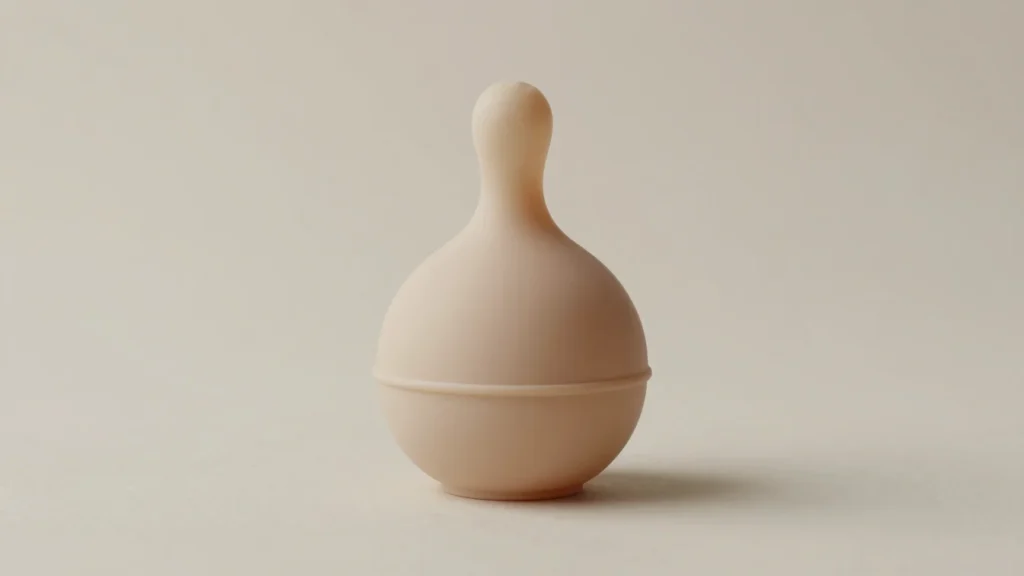
The same shape needs a different mould for each material
Epoxy & UV resin
Resin generates exothermic heat and creeps into micro scratches, so the inner surface has to be glossy
and fully cured. We specify a grade with temperature headroom for your resin volume — a thick coaster
block runs much hotter than a thin bookmark.
Ceramic slip casting
The mould has to absorb water, so wall thickness controls how fast the body sets. Thick walls give a
slower, more even cast; thin walls speed production but demand careful handling. We size it against your
slip and your cycle time.
Cold-process soap
Soap batter is alkaline and warm, and it holds detail only if the mould releases without dragging.
A matte inner surface hides tiny bubbles; a gloss surface shows every one.
Mold families in these crafts
Resin art & homeware
Coasters, trays, bookmarks, jewellery blanks, clock faces, river-table inserts. Open-face moulds for flat work, two-part moulds where both sides matter.
Ceramic & pottery
Mugs, plates, vases, tiles and handles by slip casting. Multi-part moulds with registration keys so the parts reassemble in the same position every cycle.
Soap & bath
Loaf moulds, single-bar moulds, embossed guest soaps and bath bomb shells. Smooth walls for clean stamping after cure.
Concrete & plaster
Planters, coasters and decorative panels. Heavier castings need a rigid mother mold so the silicone does not bulge under the mix.
Four mistakes that show up in the first cast
Mould too soft for the shape
A tall resin block or a wide ceramic plate needs a firmer wall or a mother mold; otherwise the sides bulge and the cast comes out thicker in the middle.
No vent at the high point
Air trapped at the top of a cavity leaves a void that only appears after demoulding. The fix is a vent channel, decided at the drawing stage.
Release agent on a glossy surface
Resin picks up every trace. If the mould needs a release agent, the inner surface is not finished well enough for the finish you promised.
Ceramic wall sized by guesswork
Wall thickness sets how fast water leaves the slip. Guess it and the body either sets too slowly or cracks in drying, and the mould gets blamed.
Parameters we confirm before tooling
| Parameter | Resin | Ceramic | Soap |
|---|---|---|---|
| Hardness | Shore A 20 – 40 | Shore A 25 – 45 | Shore A 15 – 30 |
| Wall thickness | 3 – 8 mm | 8 – 20 mm (water absorption) | 4 – 8 mm |
| Inner surface | High gloss | Matte to satin | Gloss or matte |
| Key concern | Exotherm and sticking | Shrinkage and wall saturation | Alkali resistance and release |
| Typical layout | Open-face or 2-part | 2 – 4 part with keys | Loaf or single cavity |
Values are the production range; the exact figure is fixed on your drawing.
Resin and ceramic mold questions
Will the mold survive exothermic resin?
Tell us the resin type and the pour depth. We select a grade with enough temperature headroom, and where a pour runs very hot we recommend casting in layers instead of one block.
How much shrinkage should I allow for ceramics?
Shrinkage depends on your clay body and water content, not on the mould. Send your slip data and we will size the cavity to your expected fired dimension instead of guessing.
Can one mold serve both resin and soap?
Usually not recommended. Soap needs a different release behaviour and cleaning routine, and resin residue is hard to remove completely. Two moulds are cheaper than one failed batch.
Do you supply the mother mold?
Yes for thin-wall or heavy-casting moulds. It keeps the silicone dimensionally stable when the cavity is filled.
Tell us the craft, we will specify the mold
Resin, ceramic, soap or concrete — send the shape and the process and we reply with the grade, wall and cost.