Industrial silicone parts, moulded to a drawing
Gaskets, seals, dampers, keypads and masking caps in solid silicone, compression and transfer moulded in Dongguan. 500 pcs minimum. We quote from a 2D drawing with tolerances on it, not from a photo of a part.
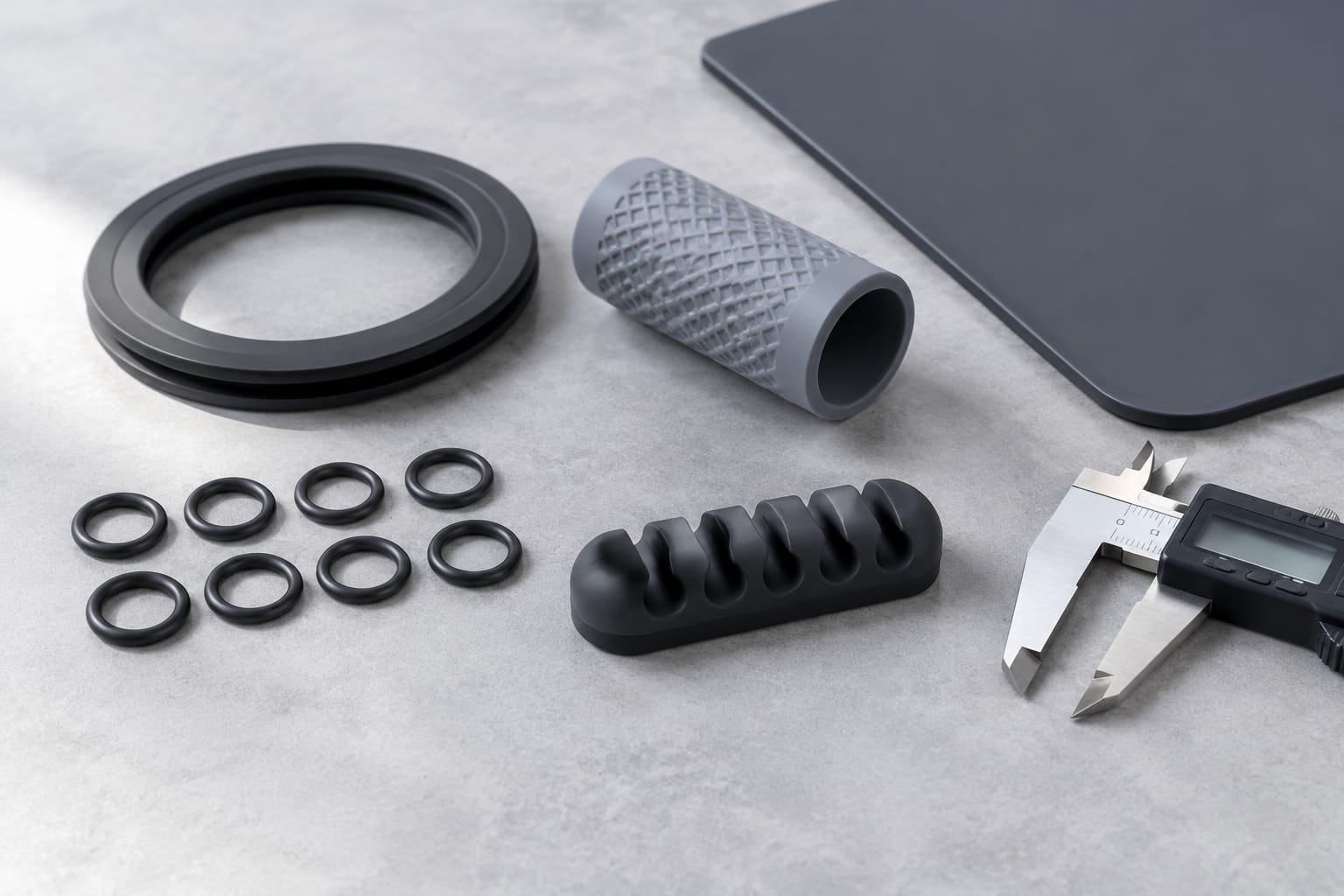
Four families, four different failure modes
Everything below is moulded in a steel or aluminium mould from solid compound. No two of these families fail for the same reason, so the questions we ask before quoting are not the same either.
Gaskets and seals
Flat, flanged and shaped seals for enclosures, appliances and machinery. The number that decides whether it works is compression set, not hardness.
Dampers and keypads
Pads, bumpers and switch mats that have to come back to shape after a million cycles. How far it recovers is a compound decision before it is a design decision.
Caps and masking plugs
Spray masks, thread protectors and shipping caps. The temperature of your finishing line decides the compound, not the shape you drew.
O-rings
Moulded rings in 30 to 70 Shore A, in general purpose and food-contact grades. Send the cord diameter and either the inside diameter or the part number you work to, and we confirm the mould from there.
An O-ring is the one part on this page where the drawing usually already exists. The cord diameter comes with the standard the ring belongs to, so the numbers we need from you are the inside diameter, the hardness and the medium it seals against, because a ring that sits in water is a different compound from one that sits in oil. Two failure modes account for most returns: the ring takes a compression set and stops sealing at temperature, or the cord is nicked during assembly and splits later. We cut the cavity short enough to allow for shrinkage, which is the number that ruins more O-rings than any other.
If your part is a single-wire seal, a connector mat seal, a two-shot part bonded to plastic or a thin bellows, it is normally a liquid silicone injection part. We do not run LSR injection, and we will say so on the first call instead of quoting a mould we cannot fill.
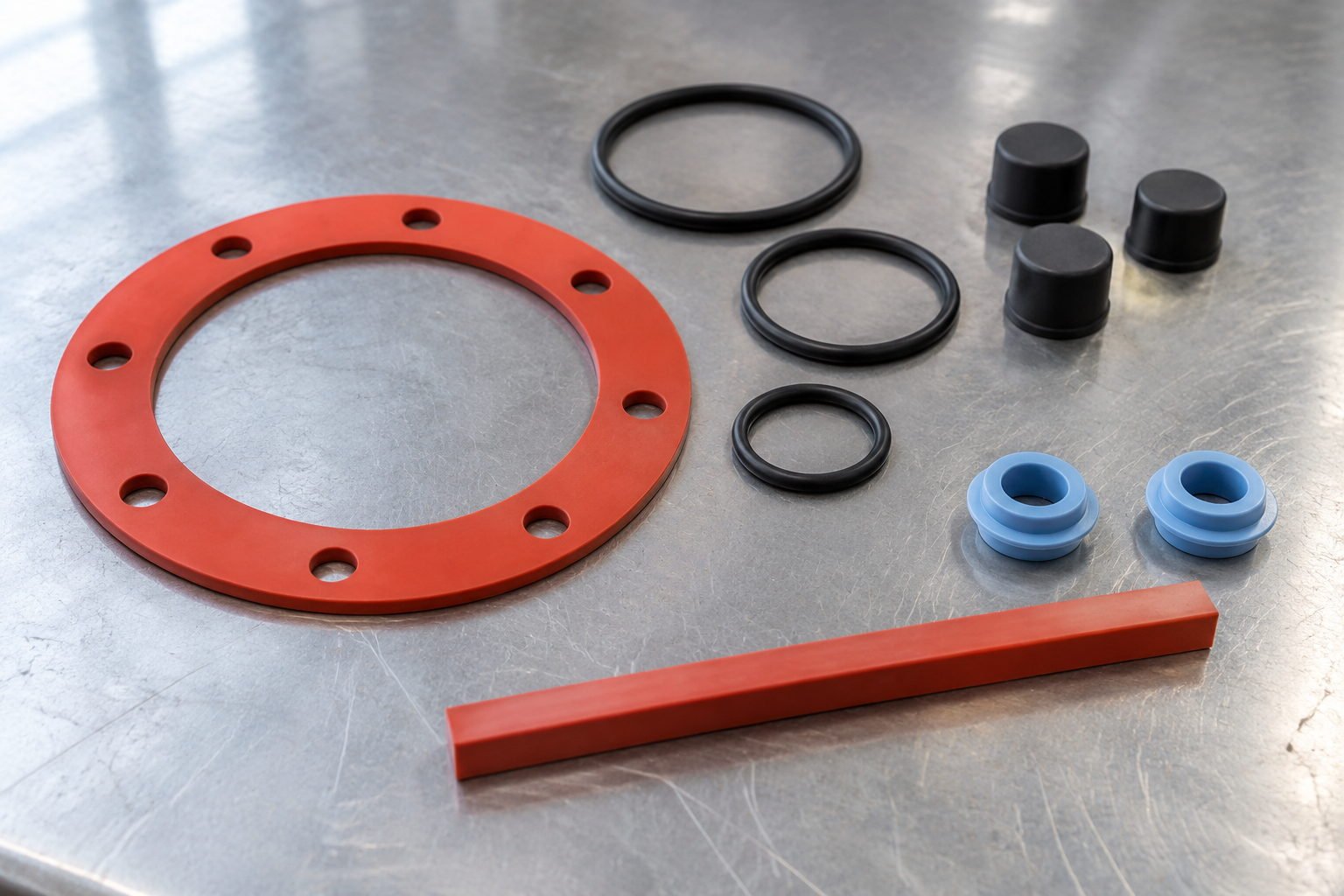
The four numbers that decide the price
Most drawings we receive are complete except for these. Fixing them before tooling is cheaper than fixing them after the first article.
| On the drawing | Range that actually exists | Why it moves the price |
|---|---|---|
| Hardness | 15 to 90 Shore A in solid silicone | Below about 30 A the part is soft enough to distort in the mould and in the measuring gauge, so inspection cost goes up |
| Service temperature | -40 to +230 °C for general purpose solid silicone | A part that only sees 120 °C does not need a high-temperature compound, and should not pay for one |
| Compression set, 22 h at 175 °C | 20 to 40% on sealing grades | This is the number that decides whether a seal still seals in year three. It is a compound property, not a tooling one |
| Tolerance class | ISO 3302-1, class M2 to M4 | The class sets the mould, the cavity count, the inspection plan and the scrap rate at the same time |
Ranges are the bands published by compound suppliers for these material families, not a guarantee for a specific grade. Compression set figures come from public silicone data sheets; solid grades vary by compound. The grade we quote travels with its own data sheet, and the drawing limits are tested against that sheet.
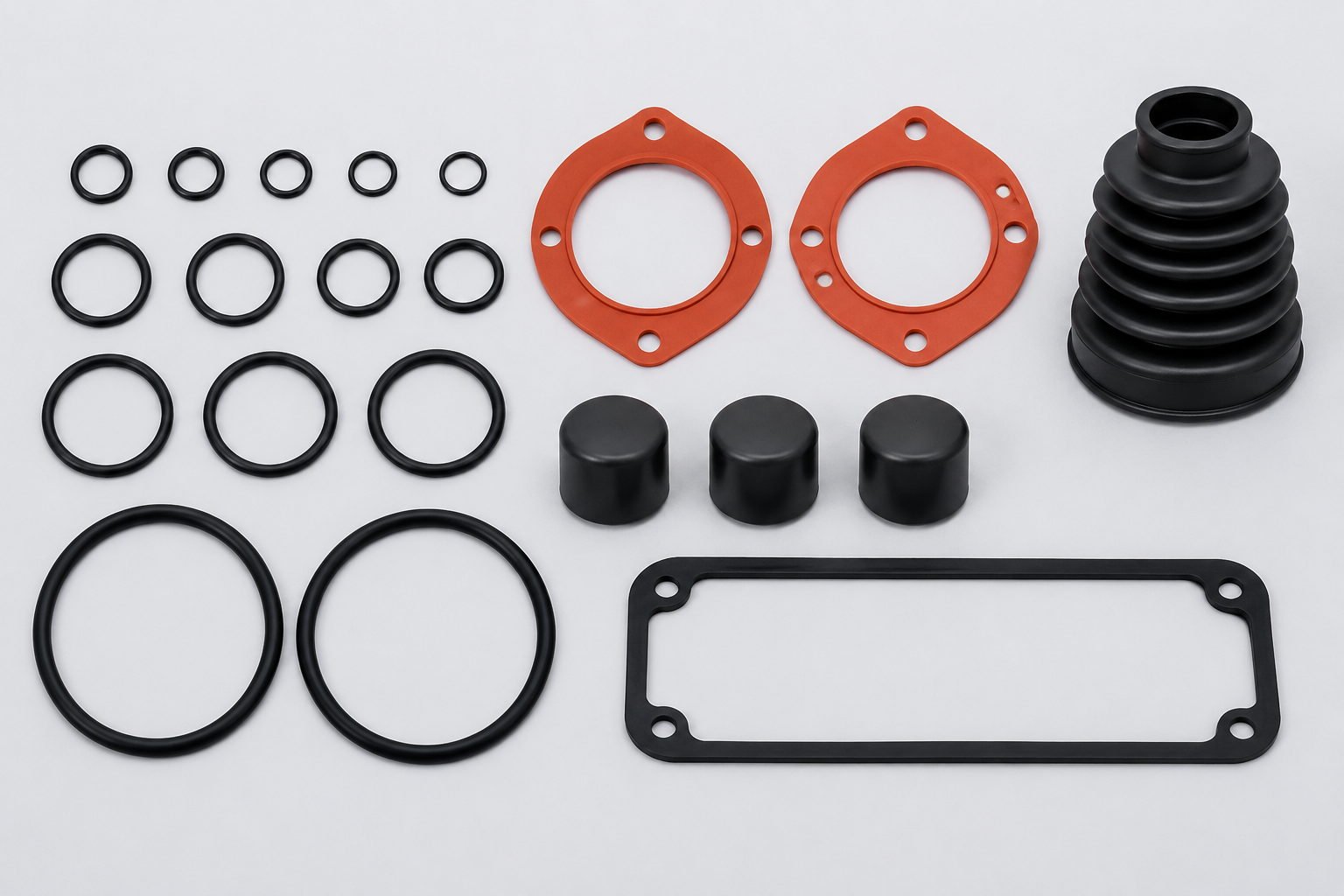
What ISO 3302-1 actually allows in silicone
ISO 3302-1 sets four classes for moulded rubber parts. It also states, in the standard itself, that silicone and other special-purpose elastomers shrink more than general purpose rubber and that classes M1 and M2 are very difficult to obtain in them. When a drawing arrives with M1 and a silicone material, one of the two has to change. We would rather raise that before the mould is cut than discover it at first article.
| Class | What it requires | What we tell customers |
|---|---|---|
| M1 | Precision mould, fewer cavities, tight compound control, optical measurement | Not realistic in solid silicone. We will say no rather than quote it and fail |
| M2 | Close control through mixing, moulding and inspection | Possible on small, simple geometry. Name the two or three dimensions that matter, not all of them |
| M3 | Normal industrial control | The class most drawings actually need, and the one we quote against |
| M4 | Dimensional control not critical | Correct for masks, bumpers and shipping caps, where nobody measures the part |
Two details from the same standard that decide whether a part passes inspection:
- Fixed and closure dimensions are not equal. A closure dimension moves with flash thickness and with alignment between mould halves. Applying a tight class to a closure dimension is the most common mistake we see on drawings, and the cheapest one to fix before tooling.
- Measure late. Dimensions are to be taken no sooner than 16 hours after cure, and 72 hours if a result is disputed. A part measured straight off the press reads small. If your incoming inspection measures immediately, the argument is about timing, not about the mould.
Compression and transfer, and what that rules out
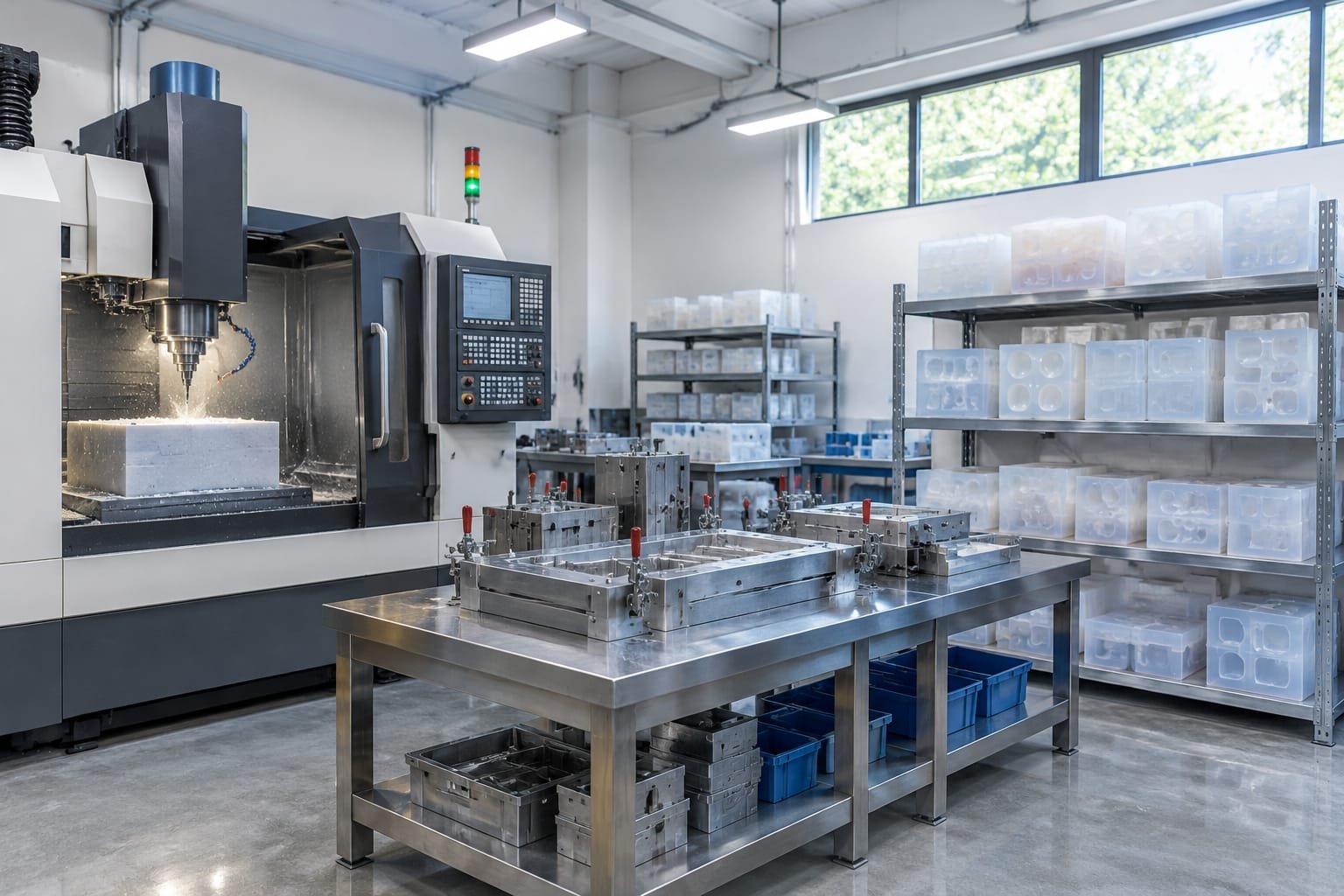
Compounding, cutting to weight, pressing, deflashing and inspection all happen on one floor in Dongguan, and the moulds are cut in the same plant. That matters for industrial parts more than it does for consumer goods: when a compound has to change because a seal is taking a set, the change happens in the same building instead of in a supplier's email queue.
What the process is good at
- Flat, flanged and shaped gaskets and seals
- Dampers, bumpers and switch mats
- Masking caps and plugs, including high-temperature masks
- Thick sections and large footprints
- Runs where tooling cost has to stay low, from 500 to 20,000 pcs
What we will not quote
- Single-wire and cavity seals for connectors
- Connector mat seals and grommets moulded in one shot
- Two-shot parts bonded to plastic or metal
- Thin-walled bellows with deep undercuts
- Anything that needs a class M1 tolerance in silicone
The second list is not a limitation we are hiding. It is the reason a buyer can send us a drawing and get an honest answer in one call rather than a quotation that collapses at first article.
Certificates and test reports
Documents are issued per order and per grade, which is what your customer's audit asks for anyway. Tell us at quotation stage which ones the file needs.
- ISO 9001 quality management system
- IATF 16949 for automotive programmes, certificate number on request
- UL-recognised silicone compounds, file number on request
- FDA 21 CFR 177.2600 and LFGB grades for food-contact parts
- RoHS and REACH declarations with the shipment
- Dimensional report and material data sheet with the first article
We quote the compound grade by name so the data sheet can be checked before production, not after. If your drawing names an ASTM D2000 line callout, send it as written and we will confirm the grade against it.
Industrial silicone part questions
What is the minimum order for an industrial silicone part?
500 pcs per part number in a standard colour. Below that the tooling is the whole cost, so tell us the annual quantity and we will suggest a cheaper route where one exists.
Can you hold a tolerance of plus or minus 0.05 mm?
On a small, simple part in a stable compound, yes. On a thin section, a soft grade or a closure dimension, no. Send the drawing and we will mark which dimensions we can hold and which ones need relaxing before we quote.
How do I specify compression set?
Put a limit on the drawing, for example 25% maximum after 22 h at 175 °C, and name the test method, ASTM D395 or ISO 815. We test the production compound against that limit and send the data sheet with the first article.
Which silicone grade should I specify for an outdoor part?
Silicone is inherently resistant to UV and ozone, so a general purpose grade is usually enough. The risk is colour drift in bright pigments. For parts that also see fuel, oil or hydraulic fluid, standard silicone is the wrong material and a fluorosilicone grade is the right one.
Do you mould O-rings, or only flat gaskets?
Both. O-rings run in the same presses as flat gaskets, in 30 to 70 Shore A. Send the cord diameter and either the inside diameter or the standard part number you work to, and we will confirm the mould and the tolerance class before quoting.
Do you make liquid silicone, LSR, parts?
No. We mould solid silicone by compression and transfer. Single-wire seals, connector mat seals, two-shot parts and thin bellows are LSR injection work, and we will say so rather than quote a mould we cannot run.
Send the drawing, get a tooling number
Attach the 2D drawing with tolerances, tell us the annual quantity and the temperature the part sees. We reply with the tooling cost, the class we can hold and a sample date. Samples run 7 days from drawing sign-off. Parts are pressed in our own plant, and the custom silicone products page covers consumer and OEM items if your part sits in both worlds.