Silicone pet products, moulded for brands and wholesalers
Slow feeders, lick mats, placemats, can lids and grooming parts in food-grade silicone. We work from your sample, drawing or reference photo, run 500 pcs per design, and ship private-label packaging from Pantone to carton.
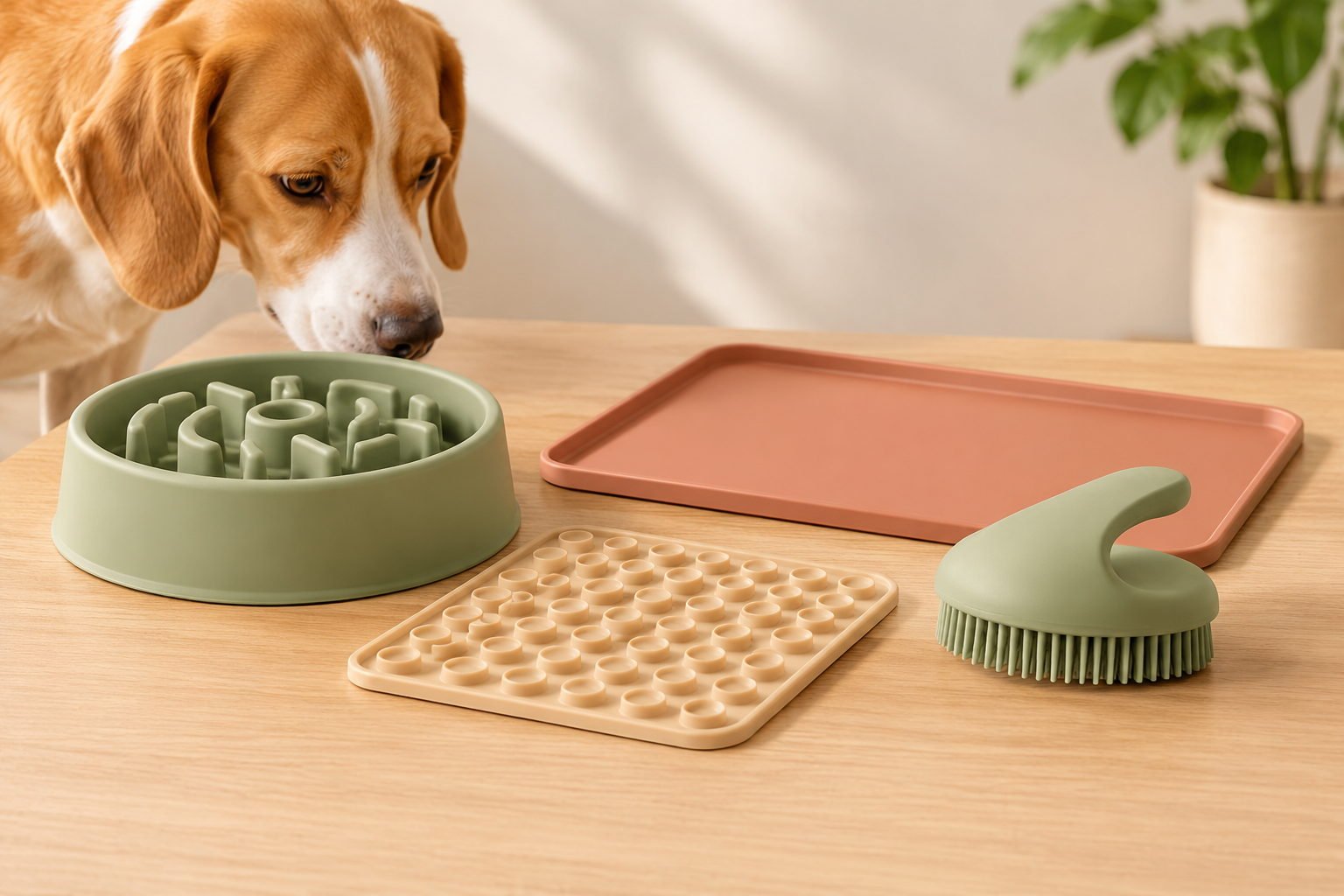
Four families, four different problems
A pet product is judged by how a dog or a cat uses it, not by a drawing. Each family below fails for a different reason, and that reason is what we design the cavity around.
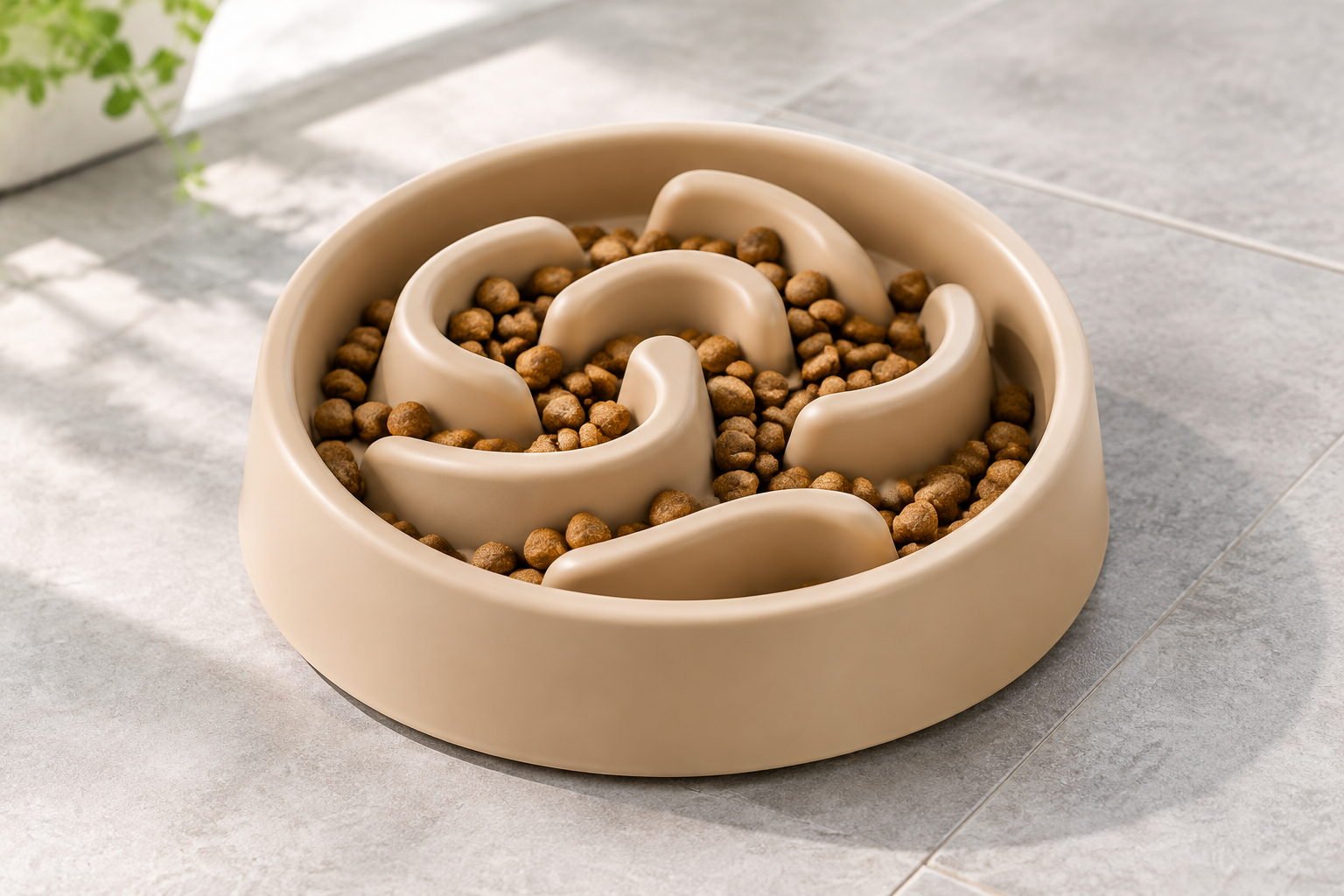
Slow feeders
The maze is the product. Depth against capacity is the trade-off: deeper channels slow the meal, but past a point the owner cannot get a brush into the corners and stops using it.
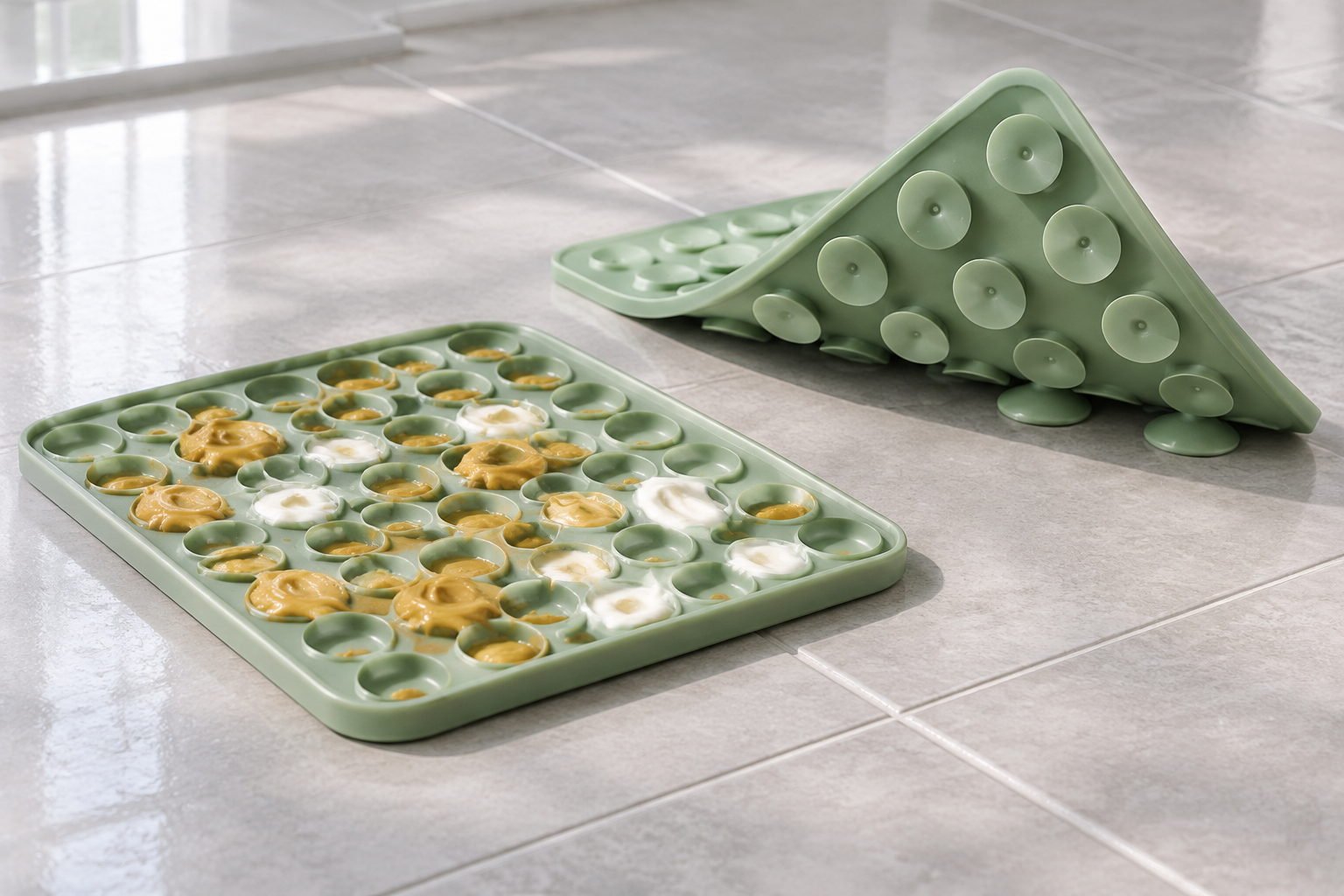
Lick mats
Suction is the product. The number of cups is easy; cup diameter, spacing and wall thickness decide whether the mat stays on tile after the third wash.
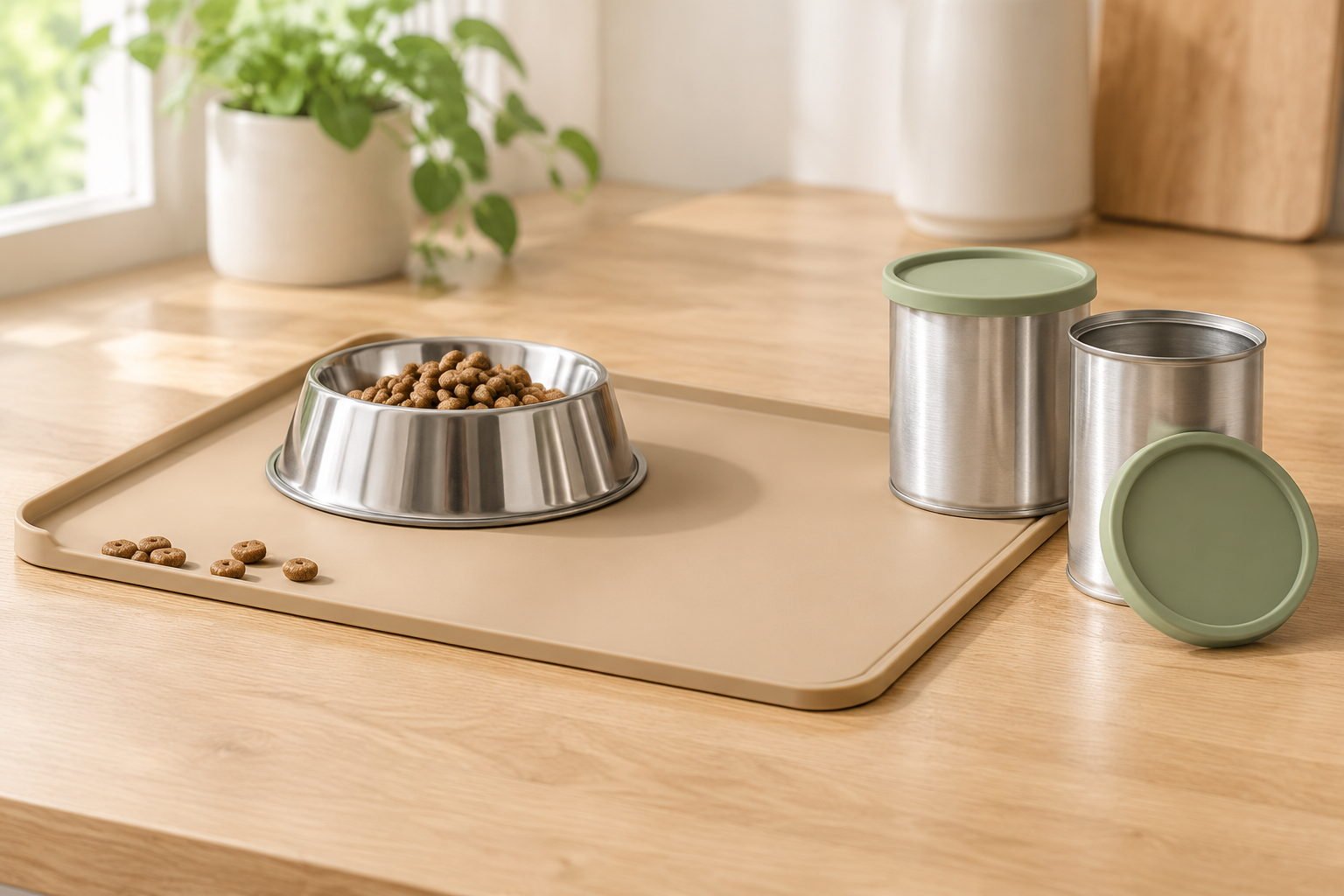
Placemats and can lids
Simple flat parts with a raised lip, which makes them look easy and makes them hard to keep flat. A mat demoulded hot and stacked too early curls at the corner forever.
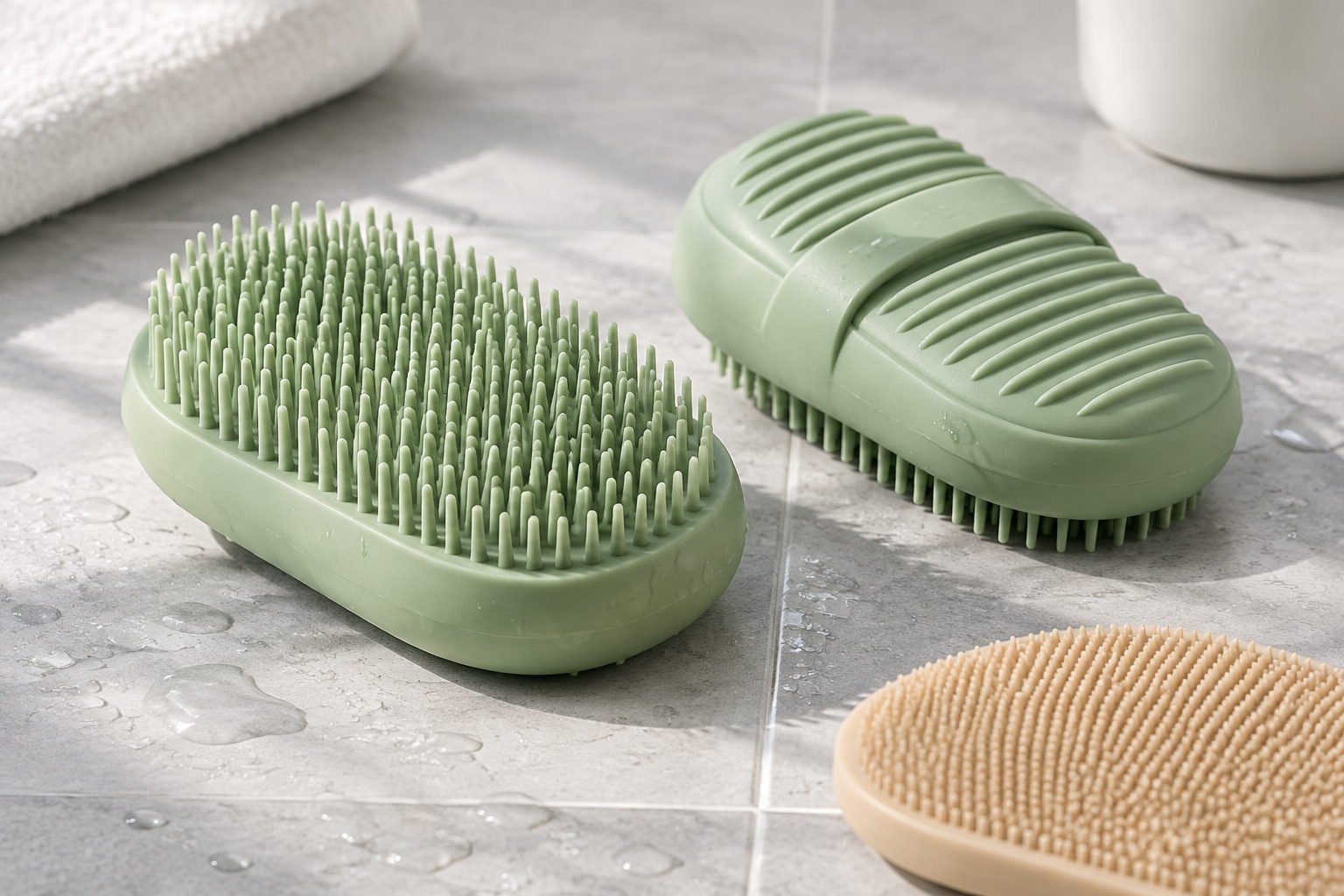
Grooming parts
A brush body wants a soft face and a stiff back. In one material that is a geometry problem, and the solution is ribbing rather than a second shot.
Why silicone, and where it stops
What it is good at
- Soft enough to flex in the dishwasher and survive being stood on
- Food-contact grades available under FDA 21 CFR 177.2600 and LFGB
- Stable from freezer temperatures to hot wash water
- Holds a moulded texture better than TPR, which is why lick mats exist at all
- Colour and surface finish are set in the mould, so the pattern does not wear off
What it is not
- A chew toy for a power chewer. Silicone tears at a nick, and a torn toy is a swallowing risk
- A structural material. A bowl that needs to stay rigid needs a rigid insert, not a harder compound
- Oil resistant. Treats containing fat, and some balms, swell the surface over time
- A material for two-shot parts. If the design needs a hard spine bonded to soft silicone, we are the wrong shop and we will say so
Slow feeders: the maze is the product
Every slow feeder is a compromise between how long the meal takes and how hard the bowl is to clean. The parameters that decide it are few, and they should be fixed before a cavity is cut, because none of them can be changed afterwards without a new mould.
- Channel depth sets the pace. Shallow ridges barely slow a fast eater; deep narrow channels slow it well and trap food.
- Channel width against brush size is the number nobody puts on a drawing. If the channel is narrower than a standard bottle brush, the bowl gets used twice and then sits in the cupboard.
- Base type is a separate decision from the maze: a plain flat base slides on tile, a suction base needs cups that survive dishwashing, and a weighted base needs a heavier part and more material.
- Wall thickness at the rim decides whether the bowl holds its shape when a dog stands on it. Too thin and the rim folds; too thick and it stops being flexible enough to release food.
Send the capacity you want in millilitres and the bowl diameter, and we will propose the maze geometry. That is faster than starting from a picture, because two bowls that look identical in a photo can hold completely different volumes.
Lick mats and the suction problem
A lick mat is a flat sheet with a texture on one face and cups on the other. The texture is what sells it; the cups are what makes people keep it. Most returns we hear about are not about the pattern, they are about the mat letting go of the floor mid-meal or a cup tearing off.
What decides whether it holds
- Cup diameter and spacing: fewer, larger cups hold harder than a field of small ones
- Cup depth and the radius at the base, which is where a cup tears first
- Compound hardness: a softer mat seals better but deforms under a licking dog
- What it is stuck to. Cups that grip glass lose on textured tile, and no geometry fixes that
What decides whether it sells
- Texture depth: deep enough to hold peanut butter, shallow enough to rinse
- Pattern continuity across the sheet, which is where cheap moulds show
- Freezer behaviour: a mat that goes in the freezer must not crack when it comes out
- Edge finish. A sharp flash line on a mat is the first thing a buyer touches
Placemats, can lids and grooming parts
Placemats
A raised lip contains spills; the flat field has to stay flat. We cut the cavity for the lip and control the demoulding temperature, because a mat stacked warm never recovers its shape.
Can lids
The rim geometry has to fit the cans your market actually sells, and can diameters are not identical between brands. Send one can and we will measure it rather than work from the nominal size.
Grooming parts
Bath brushes, shampoo brushes and hair-removal pads. The soft face with a stiff back is solved with ribbing and a thicker spine in one shot, not with a second material.
Private label, in three levels
Most buyers start at level one and move up once the product sells. Knowing which level you are buying is the difference between a quote you can use and a quote you cannot compare.
| Level | What changes | What it costs you | Typical order |
|---|---|---|---|
| Light | Colour, logo, label, hangtag, carton | No new mould; the existing cavity is reused | 500 pcs |
| Medium | Size, thickness, texture or maze pattern adjusted on an existing design | Mould modification, and a new sample round | 1,000 to 5,000 pcs |
| Full | New shape from your drawing, sample or concept | Full tooling, plus a design review before cutting | 5,000 pcs and up |
Colour matching is done on a cured chip, not on a screen. Pale pastels and bright fluorescents shift in silicone, and we would rather show you the shift before the order than after.
Silicone pet product questions
What is the minimum order for a private-label pet product?
500 pcs per design in a standard colour. Below that the tooling is the whole cost, so we will tell you honestly whether your quantity makes sense for a new mould or whether you should start from a colour and packaging change on an existing shape.
Can you match a Pantone colour?
Yes, and we will tell you which references are not achievable in silicone before you commit. Pigment behaviour in a cured silicone part differs from print, so pale pastels and bright fluorescents drift. We send a cured colour chip, not a screen proof.
Do you mould lick mats with suction cups?
Yes. Send the cup layout you want, or your existing mat, and we will review cup diameter, spacing and wall thickness before tooling. Suction is a geometry problem: cups that are too shallow hold on glass and fail on tile, and cups that are too deep tear at the rim after a few washes.
Are the products dishwasher safe and food contact safe?
We mould in FDA 21 CFR 177.2600 and LFGB grades where the part is meant for food or treats. Dishwasher durability depends on the grade and on how the part is finished, not on the word silicone, so confirm the grade with us before you print dishwasher claims on retail packaging.
Can you copy a product we already sell?
Yes, from a sample or a drawing. You confirm that you hold the rights to the design; we do not check that for you. We measure the part, correct for the shrinkage of the compound, and cut a cavity that releases the same way as the original.
Do you do two-shot or hard-soft combinations?
No. We mould solid silicone by compression and transfer, so a part that needs a rigid PP or ABS spine bonded to a soft silicone body is not something we can run. Send the drawing anyway and we will tell you in one reply whether it is a fit.
Send the reference, get a sample plan
A photo, a sample or a drawing is enough to start. Tell us the quantity, the market you sell into and whether you need retail packaging, and we reply with the tooling cost, the level of customisation you actually need and a sample date. The custom silicone products page covers the rest of our OEM range, and the factory page shows where the parts are pressed.